What “Top Real Estate Brokers” Means For Businesses And Investors
A “top” broker is not the loudest on social media, or the one with the prettiest listing photos.
For businesses, a top broker is someone who:
- Understands tenant representation and negotiates terms that match your operational reality.
- Knows your target submarkets, comps, concessions, and landlord patterns.
- Runs a clean process, so you make decisions with data, not pressure.
For investors, a top broker is someone who:
- Understands investment analysis and can sanity-check a deal quickly.
- Has deal execution discipline, pricing strategy, and negotiation strength.
- Helps you build a pipeline, not just “do a transaction.”
That is why “top real estate brokers for businesses in Los Angeles” is really two searches inside one.
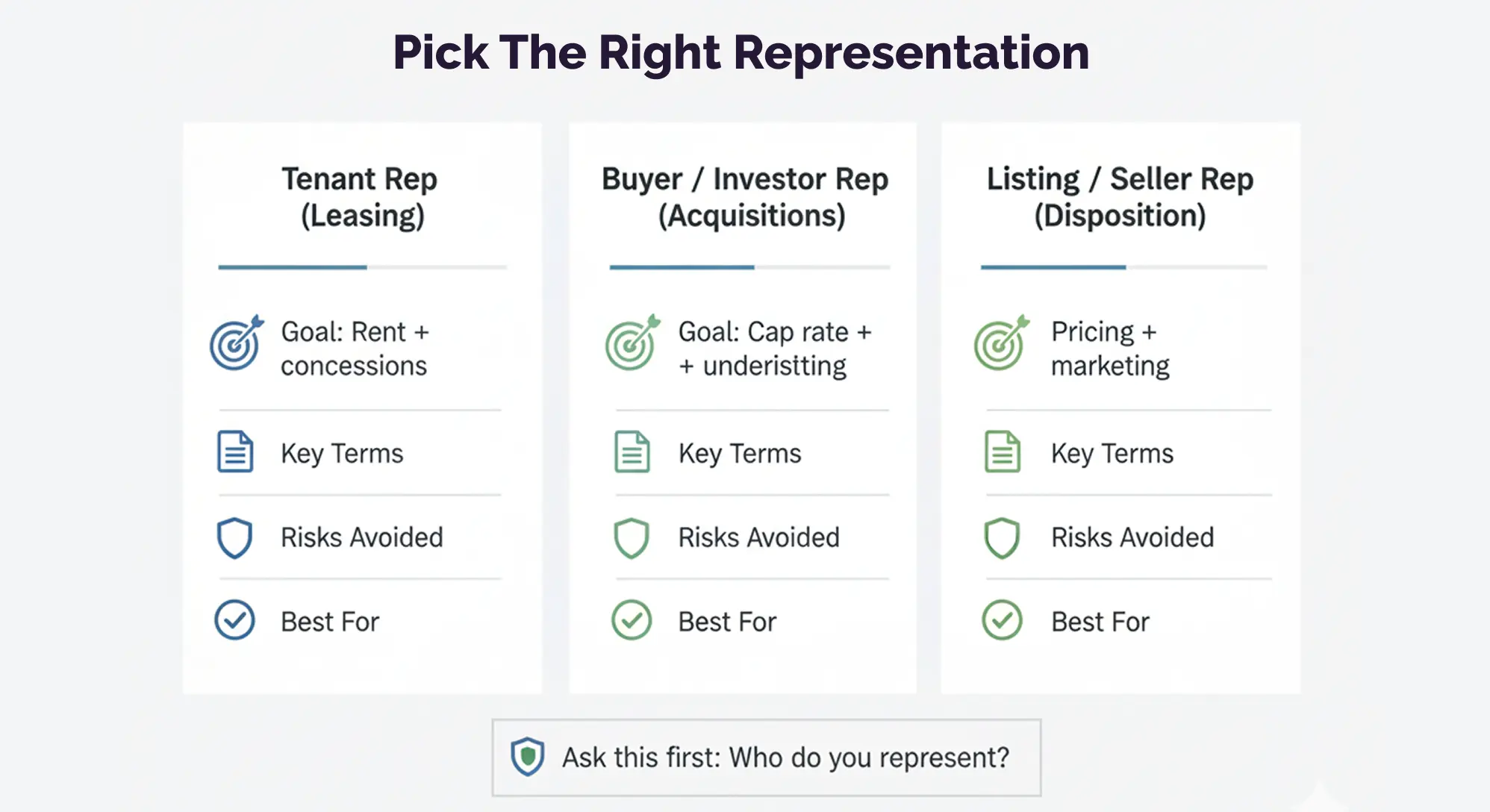
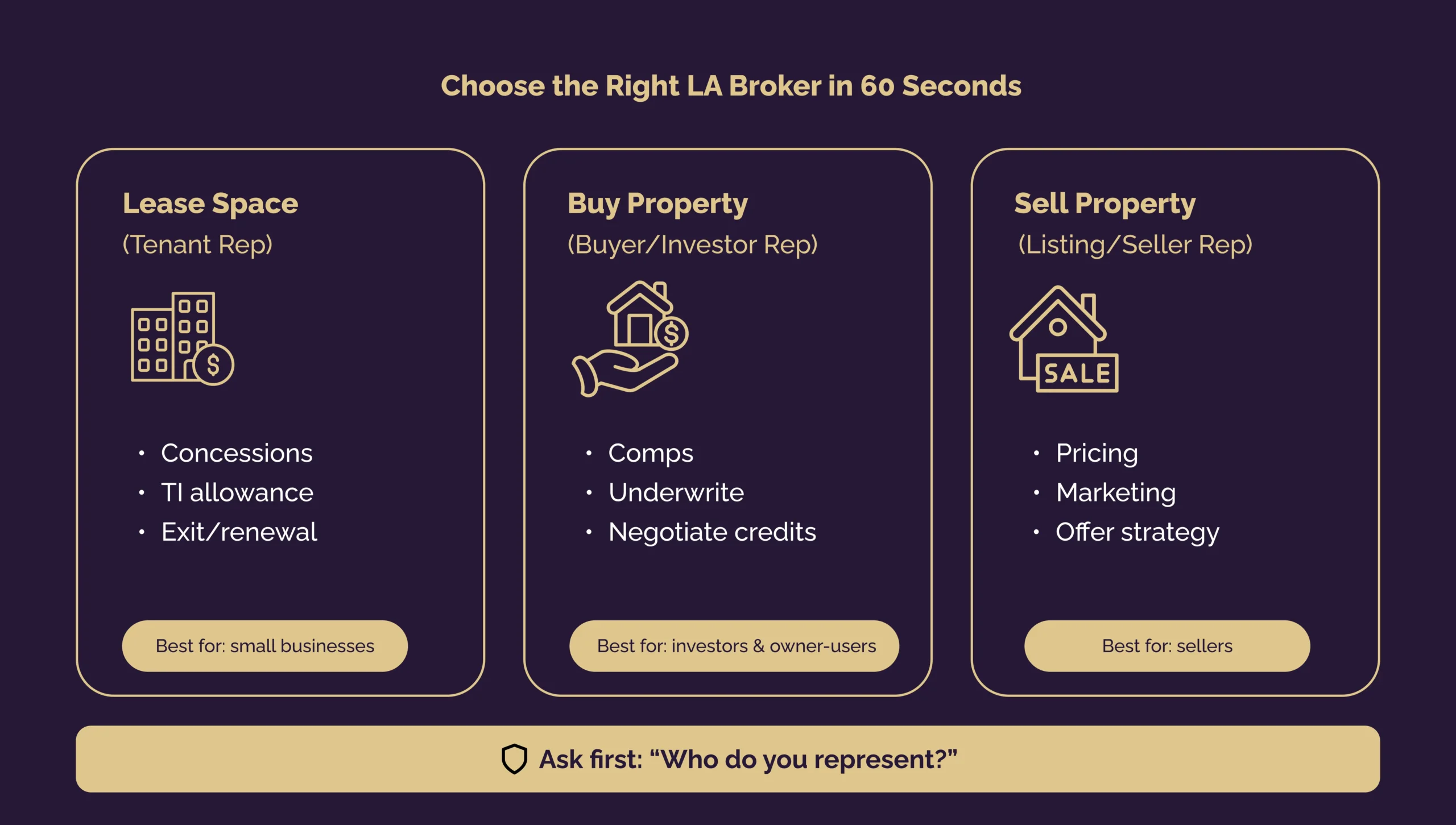
Start Here: Pick The Right Type Of Representation
Before you compare brokers, decide which lane you are actually in.
Tenant Representation Vs Landlord Representation
If you are a business leasing space, you usually want tenant representation, a broker whose job is to represent the tenant’s interest in the lease process.
Many large firms explicitly describe tenant representation as aligning real estate decisions with business strategy and financial goals.
Why this matters: conflicts happen when the same broker is heavily tied to landlord listings or pushes you toward “what is available” instead of what is best for your business.
Residential Agent Vs Commercial Specialist
Not every “real estate agent in Los Angeles, CA” is built for commercial leasing, and not every commercial broker understands small multifamily investing.
A practical rule:
- Leasing office, retail, industrial: look for tenant representation experience and commercial lease reps.
- Buying or selling 1–4 units, small multifamily, or mixed-use: look for investor experience and local comps, plus strong negotiation.
TruLine’s positioning highlights both leasing support and investment property work, which is relevant for many small businesses and investors who straddle both.
The 9 Traits Of A Broker Worth Hiring In Los Angeles
Use this as your selection filter. If a broker nails most of these, you are likely in good hands.
1. They Prove Local Competence With Specifics, Not Vibes
Los Angeles is a city of micro-markets. A good broker talks like this:
- “If you need Westside office, do you want Santa Monica, Culver City, Century City, or El Segundo. Each behaves differently.”
- “If you need industrial, South Bay, Vernon, Commerce, and City of Industry are different games.”
They do not just say, “I know LA.”
2. They Understand Credentials That Signal Commercial Mastery
Two designations worth recognizing:
- CCIM, a commercial investment designation focused on analysis and expertise.
- SIOR, a designation for top-producing specialists in industrial and office markets.
You do not need a designation to be great, but in commercial and investment deals, credentials can be a strong signal.
3. They Have A Real Process
A strong broker runs a process like a project manager:
- Timeline, milestones, decision points.
- Clear buyer or tenant criteria.
- Document checklist, disclosures, and next steps.
If the process feels chaotic early, it will be worse when deadlines hit.
4. They Know How To Verify The Basics
In California, you can verify a broker or agent license through the California Department of Real Estate’s public lookup.
A broker who welcomes license verification is a broker you can trust more easily.
5. They Negotiate, They Do Not Just “Coordinate”
A broker should be comfortable talking about:
- lease concessions, renewal leverage, exit clauses,
- pricing strategy, counteroffers, and deal structure.
If they avoid negotiation talk, that is a warning sign.
6. They Understand Timing And Market Momentum
Even within the same year, office, industrial, and multifamily markets can behave very differently.
If you are leasing office, market reports often break down submarkets, vacancy, and tenant behavior, which affects leverage and concessions.
A good broker translates market conditions into tactical decisions.
7. They Are Clear About Who They Represent
Especially in leasing, ask directly:
- Are you exclusively representing me, the tenant.
- Do you represent landlords in this area.
- How do you handle conflicts.
This is standard in tenant representation conversations.
8. They Can Show Proof Of Execution
Ask for:
- recent deal examples in your target area,
- what went wrong and how they fixed it,
- what terms they negotiated.
You are hiring execution, not promises.
9. They Match You With The Right Specialist
TruLine emphasizes an owner-led model with a large agent roster and “agent matching” style positioning.
For businesses and investors, this matters because the right specialist beats the “one agent for everything” approach.
Meet TruLine’s agents: https://trulinerealty.com/real-estate-agents-in-la/
Best Micro-Markets In LA For Different Business Models
You do not need to memorize every submarket. You just need a broker who can narrow options quickly.
A practical lens:
Creative Office And Client-Facing Businesses
Common targets include Westside nodes like Santa Monica, Culver City, Century City, Westwood, and South Bay areas like El Segundo, depending on team location and client access.
Logistics, Light Manufacturing, And Distribution
Industrial availability often concentrates around South Bay and key infill submarkets like Vernon, Commerce, and City of Industry, especially for “last-mile” needs.
Retail And Service Businesses
Your broker should talk about:
- foot traffic patterns,
- parking realities,
- visibility and signage,
- and tenant mix.
Retail is as much about the exact block as it is about the neighborhood.
Small Business Playbook: How Great Brokers Save You Money In Leases
If you are leasing, the “deal” is not the monthly rent alone. The deal is the total economics and risk.
Here are the negotiation levers that matter most.
1. Free Rent And Early Access
A good broker looks for:
- free rent months,
- early access for buildout,
- phased rent increases.
2. Tenant Improvements And Buildout Terms
If you need buildout, your broker should know how to negotiate:
- tenant improvement allowance,
- who owns the improvements,
- timeline and permit responsibility.
3. Renewal Options And Expansion Rights
Small businesses change quickly. Renewal and expansion terms protect you from getting priced out when you finally stabilize.
4. Assignment And Sublease Flexibility
If you might sell the business or restructure, flexibility clauses matter.
5. Operating Expenses And NNN Clarity
Many tenants get surprised by CAM, taxes, insurance, and annual true-ups. Your broker should explain this clearly, early.
Tenant representation is meant to be tenant-first advocacy and strategy, not just touring spaces.
Investor Playbook: How Great Brokers Protect Returns
Investors often lose money in three ways:
- buying the wrong deal,
- overpaying,
- or failing to execute.
A strong broker helps you avoid all three.
The “Fast Underwrite” Checklist
| Item |
What You Want To Know |
| Rent Roll |
Are rents real, collectible, and documented |
| Expenses |
Insurance, repairs, utilities, property taxes, management |
| Capex Risk |
Roof, plumbing, electrical, foundation, deferred maintenance |
| Tenant Quality |
Stability, turnover risk, market rent position |
| Exit Strategy |
Refinance, hold, value-add, or sell timeline |
If you are working with a broker who has CCIM-style analysis instincts, you will feel it in how they talk about deals and trade-offs.
TruLine also positions itself as having legal and real estate expertise under an owner-led broker, which can be useful when deals get complicated. TruLine has Best Realtor in Los Angeles.
The Interview: Questions To Ask Before You Sign Anything
Treat this like hiring a senior partner, because that is what it is.
Core Questions For Businesses
- Do you represent tenants, landlords, or both in my target area. How do you manage conflicts.
- What concessions are realistic right now in my submarket, and why.
- How do you evaluate total occupancy cost, not just base rent.
- What are the top three clauses you negotiate hardest for small businesses.
- What does your process look like from day one to signed lease.
Core Questions For Investors
- What deal types do you do most often in LA, and in which micro-markets.
- Walk me through your underwriting approach. What do you check first.
- How do you price and negotiate when multiple offers show up.
- How do you handle inspections, credits, and repair renegotiations.
- Can you share a recent deal where something went wrong and you protected the client.
Red Flags That Cost Businesses And Investors Real Money
Watch for these early.
- They rush you to sign an exclusive agreement before they understand your needs.
- They cannot explain representation clearly, especially in leasing.
- They talk only about listings, not outcomes and terms.
- They avoid market specifics or cannot show recent comps.
- They are vague about their communication cadence.
- They discourage you from verifying their license.
California DRE provides public license lookup, use it.
How To Find A Good Realtor In Los Angeles
This is the short, practical method that works.
- Start with 3–5 candidates, not one
- Interview them like a hire, and ask the same questions
- Verify license status through DRE
- Choose based on fit and process, not personality alone
Consumer-style guidance from large platforms also recommends interviewing multiple agents and comparing responses.
FAQs
What Are The Top Real Estate Brokers For Businesses In Los Angeles?
“Top” usually means brokers who specialize in tenant representation, know your specific submarket, and negotiate terms that match business strategy and cost goals.
Do I Need A Tenant Representation Broker To Lease Office Or Retail Space?
If you want an advocate focused on your interests, tenant representation is designed to represent the tenant in the commercial lease process.
How Do I Verify A Realtor Or Broker In California?
Use the California Department of Real Estate public license lookup to verify license status and details.
What Credentials Matter For Commercial And Investment Deals?
Designations like CCIM and SIOR can signal specialized expertise in investment analysis, office, and industrial markets.
How Do I Find A Good Realtor In Los Angeles For Investment Property?
Look for proof of investor deals, underwriting fluency, and neighborhood-level comps. A broker who can explain analysis like a CCIM-style approach is usually stronger on investment decisions.
Are There Brokers Who Help With Both Leasing And Investment Property?
Yes. Some brokerages position themselves to support leases and investment properties, which can be useful for business owners who also invest.
What Should I Expect From A Great Broker Relationship?
A clear process, fast communication, strong negotiation, and transparency about representation and conflicts.
Conclusion
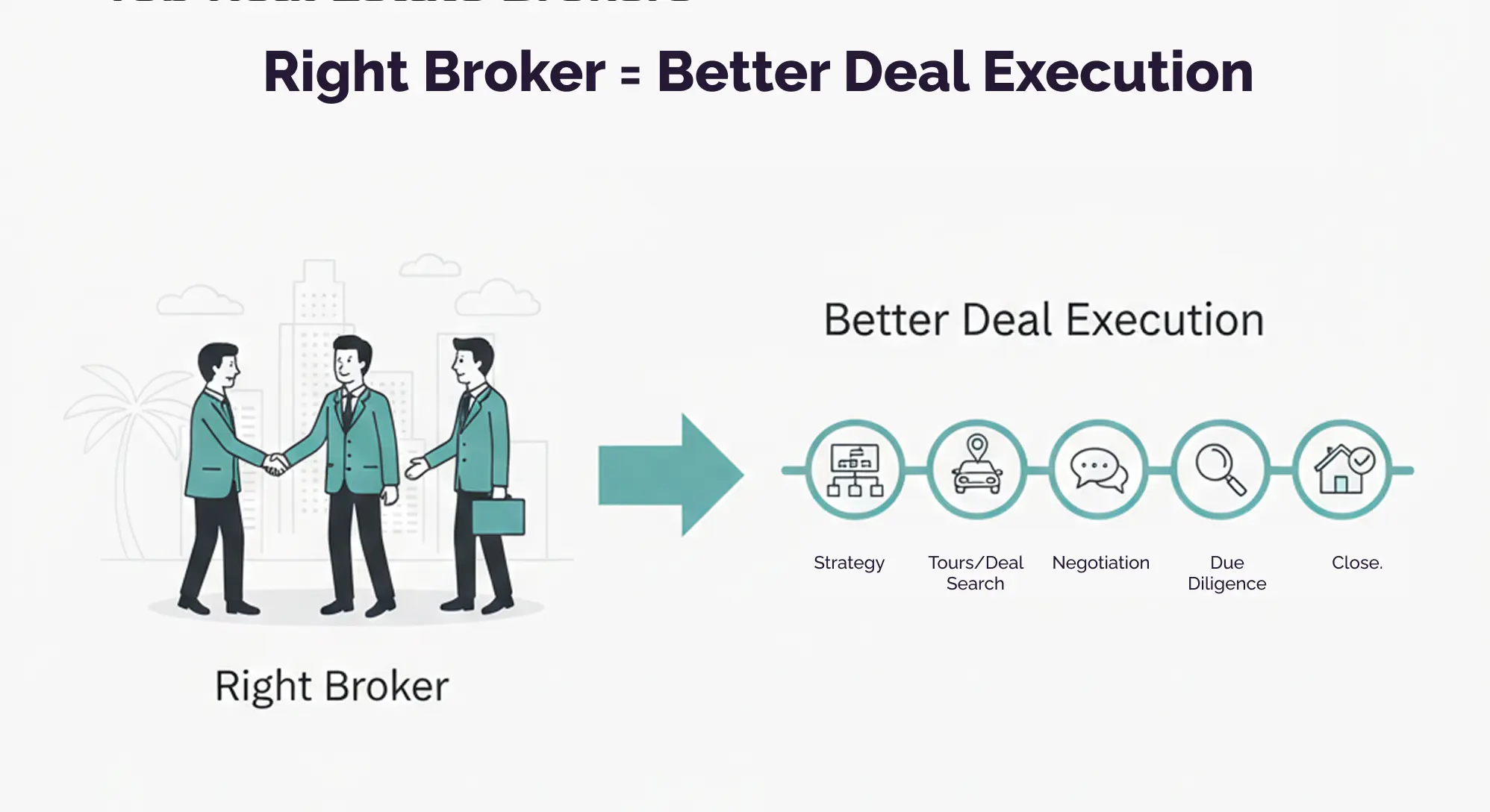
Los Angeles rewards businesses and investors who treat broker selection like a strategic decision, not a quick referral.
The right partner will help you choose the right micro-market, negotiate the terms that actually drive your outcome, and execute the deal cleanly under real deadlines. The wrong partner will show you options, but leave you exposed where it counts: lease language, pricing strategy, and execution.
Key takeaways:
- Choose the right representation first, tenant-focused for leases, investor-savvy for deals.
- Look for process, negotiation strength, and micro-market knowledge, not generic “LA expertise.”
- Verify credentials and license status, especially for high-stakes transactions.
- CCIM and SIOR can be strong signals for commercial and investment expertise.
- Interview multiple brokers and compare answers before committing.